Views: 0 Author: Site Editor Publish Time: 2026-05-09 Origin: Site
Image Source: pexels
The best dump semi trailer for construction depends on your project’s size, material, and hauling needs. You must match the trailer’s features to your specific requirements. If you choose the wrong trailer, you may face higher costs, slower work, or even safety hazards.
The right choice keeps your job on track and your crew safe.
Pick a dump semi trailer that fits your project size and material. This helps you work faster and keeps everyone safe at the site.
Think about the trailer’s size and how much it can carry. The right size means fewer trips and follows the law.
Choose the best material for your trailer. Aluminum is light and does not rust. Steel is strong and good for heavy things.
Use the 60/40 loading rule for good balance and control. This makes your trailer steady and safe when moving.
Look over trailers closely before you buy one. Check the frame, brakes, and condition to stop problems later.
You want your project to finish on time. The right dump semi trailer helps you move materials quickly. When you choose a trailer that matches your needs, you speed up material handling. This keeps your team working without long waits. You also get the most out of each trip because the trailer holds the right amount.
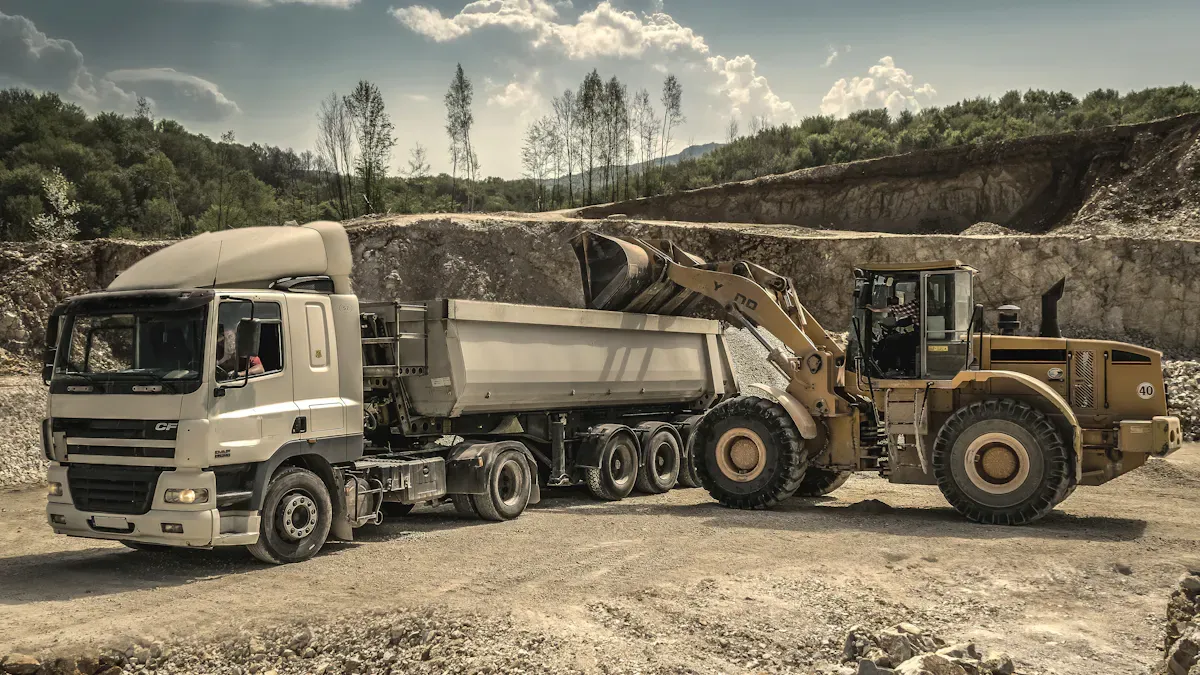
Dump trucks help you move dirt, gravel, or debris fast.
They let you carry more in each load, so you make fewer trips.
Good maintenance keeps your trailer working and avoids delays.
You can also see how unloading speed matters. If your trailer unloads fast, you spend less time at the site. This keeps your schedule on track. When you use your trailer often, you keep all parts of your project moving together. You also save money on fuel when you load your trailer the right way.
You need to think about cost and safety when you pick a trailer. The wrong trailer can cost you more in repairs and fuel. It can also slow down your work. If your trailer does not fit your truck or your job, you may face breakdowns or accidents.
Safety tip: Always check that your trailer matches your truck and your load. This helps prevent tipping and keeps your crew safe.
A good trailer choice means fewer repairs and less downtime. You also protect your workers from harm. In construction, safety and cost go hand in hand. The right trailer keeps your project safe and on budget.
You need to choose the right size and capacity for your dump semi trailer for construction. The size affects how much you can haul and how well you follow the law. If you pick a trailer that is too small, you will make more trips. If you pick one that is too big, you might overload your truck or break road rules.
Here is a table to help you compare axle configurations and their typical uses:
Axle Configuration | Typical Payload Capacity (Tons / Lbs) | Example Use Case |
|---|---|---|
2-Axle | 20-30 tons (40,000-60,000 lbs) | Light construction or agriculture |
3-Axle | 30-50 tons (60,000-100,000 lbs) | General hauling of gravel or sand |
4-Axle or More | 50-80 tons (100,000-160,000 lbs) | Heavy mining or large projects |
You also need to think about the trailer’s length, width, and height. Most end dump trailers range from 8,500 mm to 14,500 mm long, 2,500 mm to 2,550 mm wide, and 3,100 mm to 3,500 mm high. These sizes help you balance load capacity and stability.
Tip: Never overload your trailer. Overloading can damage the trailer, cause tire blowouts, and increase the risk of accidents.
The material of your dump semi trailer for construction matters. Aluminum trailers are 20–30% lighter than steel ones. This means you can carry more legal payload with aluminum. Aluminum also resists rust, so it lasts longer in wet or salty areas. Steel trailers are heavier but very strong. They handle rough use and heavy impacts better than aluminum.
Feature | Aluminum | Steel |
|---|---|---|
Trailer Weight | 20–30% lighter | Heavier |
Durability | Strong, but softer | Extremely strong, impact-resistant |
Corrosion Resistance | Naturally resistant | Needs coating and care |
Payload Potential | Higher legal payload | Limited by higher weight |
Choose aluminum if you want to haul lighter materials and need more payload. Pick steel if you work with heavy, rough loads or in tough environments.
You must decide between a framed or frameless trailer. Framed trailers have a strong steel frame. This gives them more stability, especially on uneven ground. They work well for heavy loads and rough sites. Frameless trailers are lighter and can carry more, but they are less stable on bumpy roads.
Factor | Frame | Frameless |
|---|---|---|
Trailer Weight | Lighter by 200 lbs. | |
Stability | More stable, wide axles | Less stable, narrow axles |
Center of Gravity | Low when dumping | Rises when dumping |
Maneuverability | Standard | Better in tight spaces |
Maintenance Cost | Lower | Higher |
Framed trailers absorb shocks and keep balance during unloading. This helps prevent tipping. Frameless trailers work best on flat ground and when you need to haul more per trip.
Note: If your job site has uneven terrain, a framed trailer gives you more safety and control.
You need to match your trailer to your truck and the job. Check the size, weight, and lifting system. Make sure your truck can handle the trailer’s load. The hydraulic system must lift heavy loads without trouble.
Factor | Description |
|---|---|
Size | Must fit your truck and job site |
Weight and Capacity | Match with your truck’s towing ability |
Materials and Finish | Pick steel or aluminum based on your hauling needs |
Lifting Mechanism | Hydraulic systems must be strong enough for your loads |
Think about the roads and ground at your site. Rough or bumpy roads need a trailer with good suspension.
The type of material you haul also matters. Heavy, dense materials need a stronger trailer.
Your budget shapes your choices. Prices change based on size, material, and features. Here are some examples:
Trailer Model | Dimensions | GVWR | Payload Capacity | Key Features | Price |
|---|---|---|---|---|---|
MAXX‑D D7X7210 6' x 10' | 6' W x 10' L | 9,990 lbs | 6,790 lbs | Dual axles, wireless remote, tarp, ramps | $10,998 |
LOAD TRAIL DE8314 7' x 14' | 7' W x 14' L | 14,000 lbs | 9,914 lbs | Electric brakes, scissor lift, toolbox | $8,288 |
Hillcrest HDT 7' x 16' Telescopic GN | 7' W x 16' L x 40" | 17,600 lbs | 11,038 lbs | Telescopic cylinder, heavy-duty ramps, integrated tarp | $15,488 |
Investing in a reliable trailer saves you money over time. You avoid rental fees and get a tool that works for many projects.
Set your budget before you shop.
Look for trailers that fit your needs and your wallet.
High-quality trailers cost more at first but save on repairs and last longer.
A good dump semi trailer for construction is an asset. It helps you finish jobs faster and safer, and it pays off in the long run.
Image Source: pexels
You will find many types of dump trucks on construction sites. Each type has a special design for different jobs. You need to know how each one works to pick the best trailer for your project.
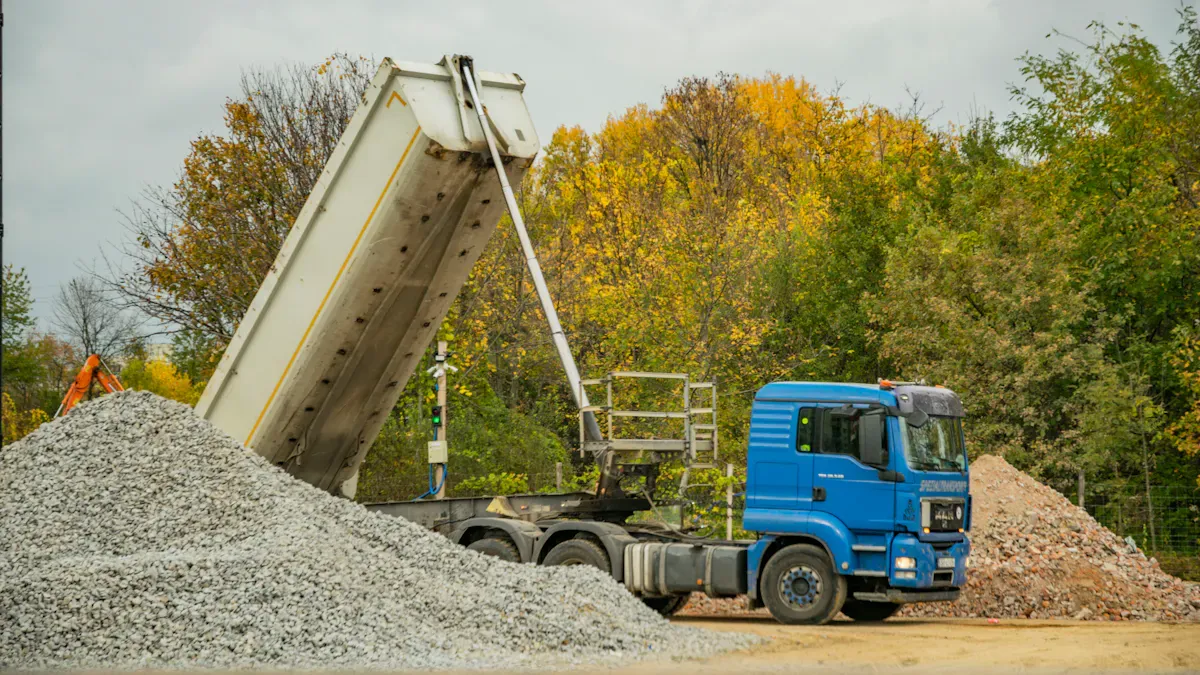
An end dump trailer uses a hydraulic lift to tip the box and unload materials from the back. You can haul large loads of rock, dirt, or debris with this trailer. The end dump trailer gives you high capacity and fast unloading. You often see this trailer on big construction or demolition projects. The standard dump truck works well for similar tasks, but the end dump trailer carries more in one trip.
Tip: Use an end dump trailer when you need to move heavy materials quickly.
A side dump trailer unloads by tilting its box to the side. You get fast and safe unloading, even on uneven ground. The side dump trailer helps you spread materials like gravel or sand along a road. You can also use a side dump trailer for waste disposal or pit mining. The side dump truck works well for road building because it places material exactly where you want it.
You can haul semi-liquids like wet soil or slurry with a side dump trailer.
The side dump trailer reduces the risk of tipping compared to an end dump trailer.
A belly dump trailer, also called a bottom dump trailer, has a gate on the bottom. You release the load by opening the gate, which spreads material in a straight line. The belly dump trailer works best for road construction and paving. You can use a belly dump to haul gravel, sand, or asphalt. The bottom dump trailer gives you control over where the material goes.
Trailer Type | Typical Use Cases |
|---|---|
Belly Dump | Road construction, paving, and spreading aggregate materials like gravel and sand. |
End Dump | Major construction or demolition projects, moving large loads in a single haul. |
Side Dump | Road building, waste disposal, pit mining, and transporting semi-liquids. |
A live bottom trailer uses a conveyor belt to move material out of the trailer. You do not need to tip the trailer, so you can unload safely under power lines or in low spaces. The live bottom trailer works for hauling asphalt, grain, or other loose materials. You get steady, controlled unloading with this trailer.
You may also see other types of dump trucks, such as the transfer dump truck, which combines a standard dump truck with a trailer for more capacity. The truck and pup dump truck gives you flexibility on small sites. The articulated hauler dump truck handles rough terrain and heavy loads.
Note: Choose the right trailer based on your job’s needs. Each type of dump truck offers unique benefits for different construction tasks.
End dump trailers unload fast. The high angle helps clear out materials. You spend less time cleaning the trailer. These trailers are strong and last a long time. You can use them for tough jobs. Quick unloading saves money and keeps work moving.
Advantages | Disadvantages |
|---|---|
Unloading is quick and saves money and time. | Tipping can happen if the ground is not flat. |
High angle leaves less stuff inside the trailer. | The trailer sits higher than other types. |
Strong trailers last longer even with hard jobs. | Not good for spreading materials evenly. |
Tip: Check the ground before unloading. Uneven ground makes tipping more likely.
Side dump trailers unload fast and safely. They do not tip over easily. The low height keeps them steady. You can control where the material goes. This helps in small spaces. The side tipping works faster than other dump trucks.
You unload fast and control the material.
You save money and work more efficiently.
You lower the chance of accidents when unloading.
Note: Side dump trailers are good for spreading materials or working in tight spots.
Belly dump trailers spread materials in a straight line. They are used for roads and paving. You control how gravel or sand flows. This helps cover big areas evenly. These trailers do not tip, so they are safer.
You place materials exactly where you want.
You avoid tipping problems.
Sticky loads may not work well in these trailers.
Tip: Belly dump trailers are best for spreading gravel on roads.
Live bottom trailers use a conveyor belt to unload. You do not tip the trailer. This keeps you safe under wires or in low places. Loading and unloading is automatic. This saves time and money. You can use these trailers all year for many materials.
Benefit | Description |
|---|---|
Productivity | Automatic loading and unloading saves time and workers. |
Safety | Less risk than regular dump trailers. |
Profitability | Lower costs and faster jobs mean more profit. |
Versatility | Works well in all seasons and with many materials. |
Note: Live bottom trailers help you finish jobs quickly and safely. They are good for steady unloading.
You need the right trailer for moving dirt, sand, or gravel. Some trailers work better for these jobs because they unload fast and handle tough materials. You can choose from several options:
Side dump trucks unload quickly and handle many types of materials, including boulders and sand. You see these trucks often in the western United States.
Superdump trucks carry heavy loads, up to 80,000 pounds, and still meet federal road standards. These trucks work well for large paving jobs.
You get better project results when you match your trailer to the type of dirt or aggregate you need to move.
You must keep concrete and asphalt at the right temperature during transport. The Asphalt Dump Semi Trailer helps you do this. It uses an automatic ignition diesel burner to keep asphalt hot and ready for use. This feature makes it the best choice for paving and roadwork.
End-dump trailers also help with material transport. Their hydraulic lift system lets you unload gravel or asphalt quickly at the job site. You save time and keep your project moving.
Demolition jobs create heavy and bulky debris. You need a trailer that can handle large loads and unload safely. Here are two good options:
End-dump trailers hold 20 to 70 cubic yards. They unload fast and leave little residue. You must watch for tipping on uneven ground.
Belly-dump trailers give you precise control when dumping debris. They work best with smaller pieces but may not handle very large chunks.
You improve safety and efficiency when you pick the right trailer for demolition work.
Some trailers work for many jobs. You want features that help you handle different tasks on the same site. Look for these qualities:
Feature | Description |
|---|---|
Reinforced Chassis | High-strength materials give you a stable ride, even in tough conditions. |
Extra Large Tires | Special tires help you drive off-road and carry heavy loads. |
Ground Clearance | High clearance keeps the chassis safe on rough ground. |
Load Capacity | The right size lets you meet your transport and loading needs. |
Quality of Accessories | Good axles and hydraulic systems keep your trailer safe and reliable. |
Vehicle Design | A low center of gravity and strong build make the trailer last longer and stay safe. |
Testing and Validation | Careful testing ensures your trailer works well for many uses. |
You get more value from a trailer that handles many types of material transport and stands up to tough jobs.
Image Source: unsplash
You should start by looking at your project. Think about what you will haul, how much it weighs, and how often you will use the trailer. Write down the main tasks for your dump semi trailer for construction. Decide if you need a bumper pull or a gooseneck trailer. Each type works best for different jobs and trucks.
You will find many models and brands on the market. Compare them by checking the frame strength, hydraulic system, axles, and bed materials. Look for trailers that match your hauling needs. Some brands offer better safety features, like strong braking systems and emergency shut-offs. Make a list of your top choices and see which one fits your budget and project.
Before you buy, inspect the trailer in person if you can. Check the welds, the quality of the steel or aluminum, and the condition of the hydraulic system. Ask about the warranty. A good warranty shows the company stands behind its product. You want a dump semi trailer for construction that will last and is easy to maintain.
You need to load your trailer the right way. The 60/40 loading rule helps you stay safe. Place about 60% of the weight in the front half of the trailer and 40% in the back. This keeps the trailer balanced and steady. You will notice better control when steering and braking. The trailer will sway less, even at highway speeds. Good weight balance means safer trips for you and your crew.
Tip: Always follow the 60/40 rule to protect your trailer and keep your project on track.
Before you choose your dump semi trailer, you need to check a few important things. This checklist helps you make a smart and safe decision. Use it when you look at new or used trailers.
Inspect every system on the trailer. Look at the frame and underbody. Check for rust, cracks, or sagging. These problems can mean the trailer is weak or unsafe.
Confirm the braking system works well. Press the brakes and see if they hold pressure. Look at the brake pads. They should not be too thin or worn out.
Check the suspension and axles. Make sure there is no sagging or leaking. Good suspension keeps your trailer steady on rough roads.
Walk on the trailer floor. Feel for soft spots or damage. A strong floor keeps your load safe.
Test all the lights. Turn on the headlights, brake lights, and signals. Check the electrical connections for loose wires or corrosion.
Open and close all doors and seals. They should move smoothly and close tightly. Good seals keep your load dry and safe.
Watch for red flags. Overpainted frames can hide damage. Unusual tire wear may show alignment problems. Leaks under the trailer can mean trouble with the hydraulic or brake systems.
Tip: Take your time during the inspection. A careful check now saves you money and trouble later.
You can print this checklist or save it on your phone. Use it every time you look at a trailer. You will feel more confident and ready to make the right choice for your construction needs.
You need to match your dump semi trailer to your construction needs. End dump trailers work best for most jobs, like moving gravel, sand, or debris. They help you unload quickly and keep your project on schedule. You should always check local rules, your budget, and the trailer’s features before you buy.
Before you make your choice, follow this checklist:
Decide how you will load and unload materials.
Check size and weight rules in your area.
Match trailer size to your typical loads.
Choose the right dump type for your job.
Inspect brakes, tires, and hitch for safety.
Careful planning helps you pick the best trailer for your work.
You will find several dump truck types, such as end dump, side dump, and belly dump. Each type works best for certain jobs. You should choose the type that matches your hauling needs and job site conditions.
You need to research local laws, buy the right equipment, and get insurance. You should also plan your budget and find reliable clients. Good planning helps your dump truck business grow and succeed.
Yes, you can use dump semi trailers with many kinds of heavy construction equipment. You should check that your trailer matches the size and weight of your machines for safe transport.
You should inspect your trailer before every use. Look for damage, check the brakes, and test the lights. Regular checks keep your trailer safe and help you avoid costly repairs.
You should clean your trailer after each job. Check the tires, brakes, and hydraulic system often. Grease moving parts and fix any problems right away. Good maintenance keeps your trailer working longer.