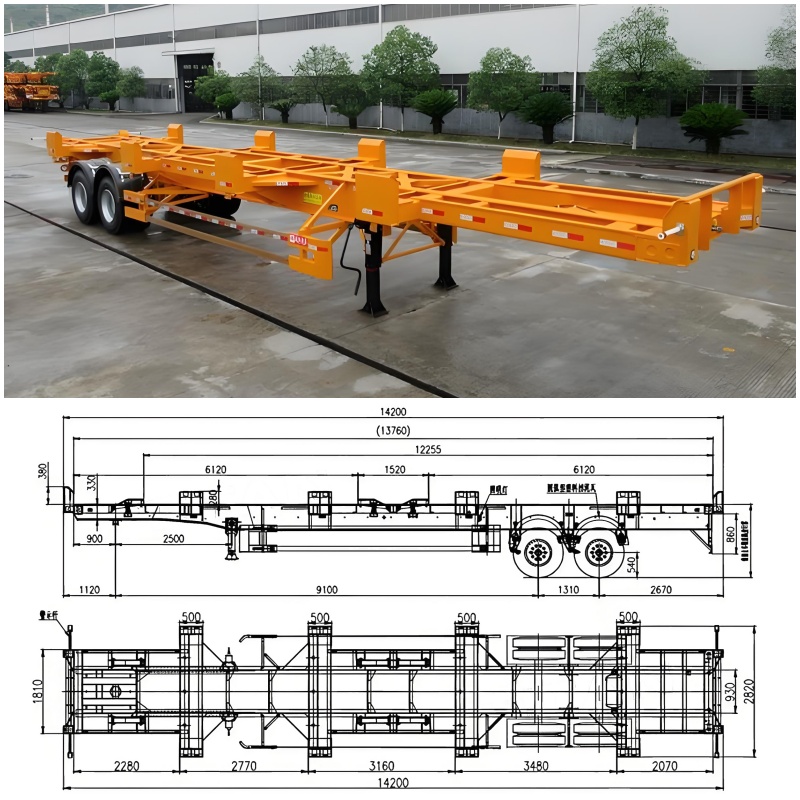
Views: 0 Author: Site Editor Publish Time: 2026-07-06 Origin: Site
Standard container semi trailers provide the foundation for modern intermodal transport. These units move massive cargo volumes globally every single day. However, operational efficiency, fleet safety, and specialized load requirements dictate the need for strategic accessory upgrades. Selecting the right accessories is never just about aesthetic improvements. Buyers must weigh upfront costs against long-term operational savings, DOT compliance, and cargo security. Every structural modification acts as a deliberate capital allocation decision impacting daily hauling operations.
This guide provides an evidence-based framework for evaluating and selecting equipment add-ons. You will learn how to identify essential structural upgrades and implement safety enhancements. We will show you how to tailor Container Semi Trailers to specific industry profiles. We explore practical evaluation metrics to help distinguish necessary investments from unnecessary expenditures. By the end, you will understand how to build a reliable, compliant, and highly efficient transport system.
Operators must start outfitting their fleets by focusing on foundational load-securing elements. Proper securing hardware prevents catastrophic load shifts during transit. The structural integrity of these components directly impacts public safety and driver confidence.
Implementing these essential structural upgrades requires careful vendor selection. Avoid cheap cast-iron components. They are prone to microscopic fracturing under repetitive stress. You must demand material certification sheets before purchasing bulk locking mechanisms.
Highway safety standards evolve constantly. Fleet managers must proactively upgrade equipment to avoid expensive compliance violations. Proactive upgrades also reduce your overall liability risk significantly.
Blowouts and premature tire wear remain primary operational cost drivers. Automatic Tire Inflation Systems (ATIS) and Tire Pressure Monitoring Systems (TPMS) offer verifiable fuel and maintenance savings. These tools actively monitor pressure levels. ATIS goes further by automatically adding air to under-inflated tires while rolling. You eliminate manual pressure checks and prevent catastrophic sidewall failures.
Exceeding minimum FMCSA and DOT requirements mitigates severe legal liability. Enhanced lighting and conspicuity gear significantly improve nighttime visibility. You must compare sealed LED harness systems against traditional incandescent setups. Focus closely on vibration resistance and superior moisture sealing capabilities. Sealed LEDs drastically reduce electrical shorts. Filament bulbs break frequently due to constant road vibrations.
Aerodynamic skirts and fairings provide excellent scalability. High-mileage fleets often see fuel savings ranging from four to seven percent using these additions. Skirts redirect turbulent air away from the rear axles. However, they remain largely unnecessary for local, low-speed drayage operations. You should analyze your average highway speeds before investing in aerodynamics.
Customizing Container Semi Trailers for specific operating environments prevents premature equipment failure. A one-size-fits-all approach inevitably leads to wasted capital. You must configure the chassis based on daily environmental exposures and cargo demands.
Construction and heavy equipment sectors demand rugged, durable add-ons. Harsh off-road environments destroy fragile components rapidly. You need bolt-on aluminum storage toolboxes for housing dunnage, binders, and heavy chains. Add heavy-duty mud flap hangers and reinforced bumper guards. Avoid cheap steel toolboxes. They add unnecessary tare weight and rust rapidly under off-road conditions. Aluminum provides an exceptional strength-to-weight ratio. It resists corrosion even when scratched.
Retail logistics and intermodal drayage operations require maximum speed. Port drivers face entirely different challenges than construction haulers. Quick-release gladhands speed up the pneumatic coupling processes. Reinforced dock bumpers protect the rear chassis during repetitive loading dock approaches. GPS tracking nodes and advanced telematics provide vital location data for dispatchers. Accessories in this sector must focus entirely on minimizing turnaround time at congested facilities.
| Industry Profile | Required Core Accessories | Primary Operational Objectives | Material & Build Focus |
|---|---|---|---|
| Construction / Heavy Duty | Aluminum toolboxes, reinforced bumpers, heavy mud flaps | Withstand harsh off-road impacts and store heavy dunnage | Lightweight aluminum, high-tensile steel framing |
| Retail / Intermodal Drayage | Quick-release gladhands, GPS telematics, dock bumpers | Minimize turnaround time, track assets, prevent dock damage | Impact-resistant rubber, weather-sealed electronics |
| Long-Haul Logistics | ATIS, aerodynamic skirts, sealed LED harnesses | Maximize fuel efficiency, prevent roadside breakdowns | Flexible composites, vibration-resistant wiring |
Deploying specialized setups requires precise planning. You should map out your exact operational environment before committing funds. Assess daily mileage, road surface conditions, and typical wait times at specific delivery nodes.
Procurement teams face constant pressure to minimize initial capital expenditures. However, choosing cheap accessories often leads to expensive roadside failures. Establishing a strict decision framework protects your long-term operational budget.
Choosing between OEM and aftermarket parts requires systematic evaluation. OEM parts guarantee exact fitment and preserve original structural warranties. Aftermarket components often offer significant upfront cost savings. However, they require rigorous vetting for material gauge and shear strength. You must request independent testing data when buying critical load-bearing aftermarket parts.
Material finishes directly impact component lifespan. Hot-dipped galvanized components heavily outperform powder-coated alternatives. This holds especially true in coastal or port environments dealing with intense salt spray exposure. Galvanization bonds zinc directly to the steel. It prevents aggressive rust formation even if the surface gets deeply scratched. Powder coating often chips, allowing hidden rust to destroy the metal underneath.
An accessory becomes entirely useless if replacement parts take weeks to source. Prioritize vendors offering robust domestic distribution networks. Strong supply chains reduce costly equipment downtime. Reliable warranty coverage mitigates your long-term operational risks. Always read the fine print regarding warranty labor coverage.
Consider the following best practices during your vendor evaluation process:
Selecting the right hardware represents only the first step. Improper installation ruins even the highest-quality components. You must plan the implementation phase meticulously to avoid extended equipment downtime.
Installation methods dictate future flexibility and repair speed. Bolt-on accessories allow for quick field replacement using standard hand tools. Weld-on accessories provide superior structural integrity. However, they require certified welders and specialized workshop facilities. Welding also increases equipment downtime significantly. Heat from welding can occasionally weaken the surrounding chassis temper if done incorrectly.
Added mechanical complexity always introduces added maintenance requirements. Moving parts found in twist locks and sliding axles require scheduled lubrication. Neglecting this basic maintenance leads to seizing components and severe operational delays. Establish strict inspection intervals for all upgraded accessories. Grease zerks must be cleared and lubricated during every preventative maintenance cycle.
Audit your current failure points before purchasing new upgrades. Identify frequent lighting shorts or repetitive docking damage across your fleet. Target these specific vulnerabilities during your first wave of accessory investments. Strategic upgrades eliminate recurring maintenance headaches effectively. Document failure data meticulously to justify future procurement budgets.
Equipping container transport systems remains a highly localized decision. You must base choices on specific routes, cargo types, and local compliance environments. A smart strategy focuses heavily on solving known operational bottlenecks.
Avoid over-specifying your chassis with unnecessary features. Excessive accessories reduce your payload capacity and complicate daily maintenance schedules. Start outfitting your equipment by addressing safety and compliance-mandated upgrades first. Once you secure the foundation, scale toward efficiency accessories like aerodynamics based on verified fleet data.
Take immediate action by analyzing your maintenance logs today. Consult with a commercial trailer specialist to audit your current chassis configuration. They will map out a compliant, highly targeted accessory upgrade plan tailored specifically to your daily operations.
A: Twist locks are not universally identical. While they adhere to strict ISO standards to ensure global compatibility, spacing requirements differ. Operators must match locks to chassis designed for 20ft, 40ft, or 45ft containers. Retractable locks fold away to accommodate diverse loads, whereas fixed locks remain stationary. Always verify your specific chassis dimensions before purchasing replacements.
A: Installing aftermarket accessories can compromise your structural warranty if done incorrectly. Weld-on modifications alter the original steel temper and often void OEM guarantees. Bolt-on additions generally pose far fewer warranty risks. You should always consult your OEM guidelines before altering the main chassis frame. Using approved installation methods ensures you maintain full protection.
A: Major port authorities enforce strict minimum safety requirements constantly. Your chassis must feature compliant DOT conspicuity tape for high visibility. Functional, impact-rated underride guards are mandatory to prevent severe collision damage. You also need verifiable locking mechanisms, specifically ISO-certified twist locks. Failing to maintain these basic accessories results in immediate gate rejection.
A: Yes, investing in aluminum storage boxes is highly recommended. While aluminum carries a slightly higher upfront cost, it delivers significant payload weight savings. Aluminum also offers vastly superior corrosion resistance. Over a 5-10 year lifecycle, especially in harsh coastal environments, aluminum prevents rust-related replacements entirely and improves overall fuel economy.