Views: 0 Author: Site Editor Publish Time: 2026-06-04 Origin: Site
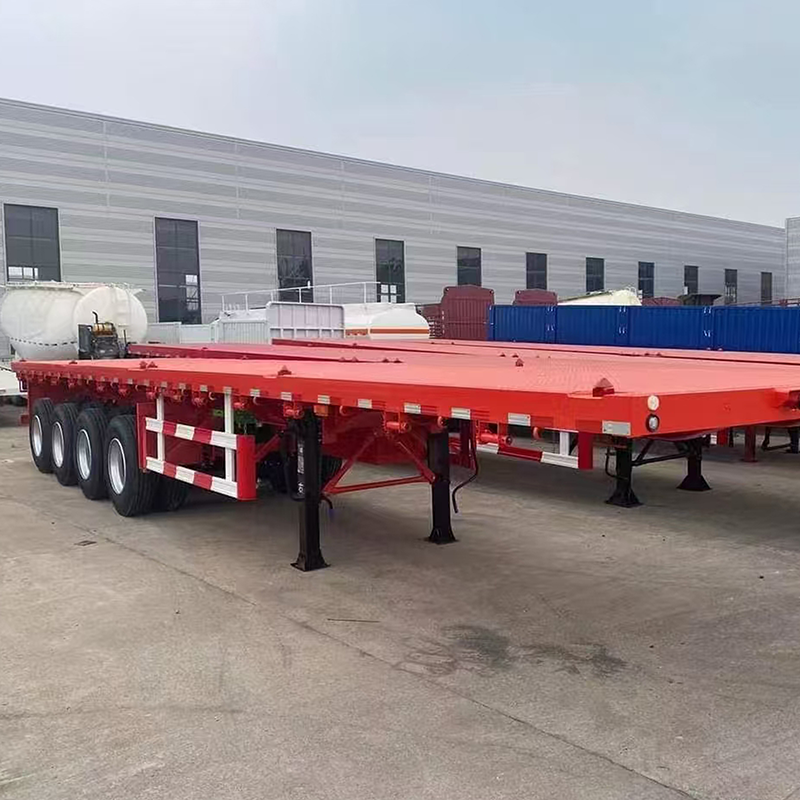
Commercial freight presents harsh operational realities. Every mile tests equipment to its absolute limits. A Flatbed Semi Trailer endures grueling conditions daily, from bearing extreme payload weights to surviving brutal weather exposure. Reactive maintenance inevitably leads to forced roadside repairs. Fixing components only after they break triggers FMCSA compliance violations and severely compromises cargo safety. We understand the daily struggle fleet managers and owner-operators face. For commercial fleets, maintaining these assets is not just a mechanical obligation. It dictates long-term profitability and overall business survival.
Maximizing asset lifespan requires a permanent shift in strategy. You must move from basic compliance checklists to predictive, standardized maintenance frameworks. Harsh environments and uneven cargo constantly attack structural integrity. This guide outlines commercial-grade inspection schedules. It details crucial hard-part upgrade decisions and structural preservation tactics. You will learn practical methods to minimize downtime. We will show you how to protect profit margins and keep your heavy-duty equipment rolling safely across every route.
Many operators view frame maintenance strictly as an overhead cost. You must reframe this mindset. Evaluate maintenance as a proactive profit center. It acts as critical risk mitigation against cargo damage, expensive liability claims, and compromised company reputation. A well-maintained Flatbed Semi Trailer consistently secures premium freight contracts. Shippers trust reliable equipment.
Identifying high-cost repair centers is your first step toward financial control. Brake systems and suspension components typically represent the highest ongoing repair costs. Minor alignment deviations or tiny air-line leaks seem insignificant at first. Left unmonitored, these minor issues cascade rapidly. They turn into total component failures mid-route. Replacing a seized axle is astronomically more expensive than routine lubrication.
We must also acknowledge the hidden variable in asset longevity. Driver behavior heavily dictates mechanical stress. Hard braking generates immense friction. Aggressive cornering twists the chassis and degrades tire tread unevenly. Fleet maintenance programs must include driver education. Teaching mechanical sympathy truly extends trailer lifespan. When drivers understand how their actions impact the hardware, they operate more smoothly. This reduces wear on brakes, suspension joints, and cargo securement points.
Preventative maintenance requires a strict controlled environment mandate. Inspections must occur in a fully equipped facility. This ensures technician safety and superior diagnostic accuracy. It avoids the inherent dangers of roadside patching. Mechanics need proper lighting, calibrated tools, and level ground to identify micro-fractures and subtle alignment shifts.
Monthly audits catch surface-level degradation before it causes a breakdown. Implement these specific checks every 30 days:
Biannual deep-dives focus on internal mechanics and structural integrity. These require specialized tools and extra downtime.
Standard factory parts prioritize baseline cost-efficiency. They are rarely designed for extreme, multi-decade longevity. Upgrading hardware during routine maintenance prevents chronic issues. Replacing factory vulnerabilities directly protects your bottom line.
Suspension systems endure relentless punishment. Evaluate swapping standard plastic factory bushings for heavy-duty bronze bushings. Plastic deforms under heavy loads and cracks in freezing temperatures. Bronze withstands severe friction and extreme temperature fluctuations. Furthermore, implement greasable bolts containing zerk fittings. These allow technicians to actively flush out accumulated grit. Pumping fresh grease purges abrasive dirt and combats harsh road conditions.
Wood decking takes a beating from heavy pallets, chains, and forklifts. Frequent travel on degraded roads causes intense vibration. This vibration forces standard self-tapping screws to loosen over time. Protruding screws damage cargo and create tripping hazards. Upgrading to penetrating through-bolts secures the wood deck far more effectively. Space these bolts at 48-inch intervals. Through-bolts clamp the wood directly to the steel cross-members, practically eliminating deck rattle.
Never leave wood decking fully exposed to the elements. Raw exposure leads to rapid rot and environmental decay. Instead, apply specialized protective layers. Consider marine-grade coatings, commercial bed-liner sprays, or heavy oil-based deterrents. These treatments repel water, block UV degradation, and resist chemical spills. Annual re-application keeps the deck structurally sound for years.
Below is a comparative table summarizing standard factory components versus high-ROI upgrades.
| Component Group | Standard Factory Part | Heavy-Duty Upgrade Option | Primary Longevity Benefit |
|---|---|---|---|
| Suspension Bushings | Plastic / Nylon | Machined Bronze | Resists deformation under heavy side-loads. |
| Suspension Hardware | Standard Solid Bolts | Greasable Bolts (Zerk Fittings) | Allows grit flushing and extends joint life. |
| Deck Fasteners | Self-Tapping Screws | Penetrating Through-Bolts | Prevents loosening from extreme road vibration. |
| Wood Decking Finish | Raw Exposure / Basic Paint | Marine-Grade Spray / Bed-Liner | Stops rot, repels water, and blocks UV rays. |
Improper loading does not just risk safety on the highway. It actively degrades the chassis and suspension. Understanding the physics of asset wear is mandatory for fleet survival. A Flatbed Semi Trailer requires precise weight management to prevent structural bowing and axle fatigue.
Drivers must master spatial mathematics. Always aim to position roughly 60% of the payload weight in the front half of the trailer. Place the remaining 40% in the rear. This standardizes the center of gravity directly between the drive axles and the trailer axles. It aggressively reduces trailer sway, commonly known as fishtailing. It also minimizes lateral axle stress during high-speed cornering.
Cargo physics change dynamically once the truck starts moving. Observe the 50-100 mile rule. Cargo naturally settles and shifts due to constant road vibration. Fabric straps stretch slightly. Wood blocks compress. Failing to re-tension straps after the first 50-100 miles causes serious problems. Loose cargo creates jarring impacts against the decking and tie-down points. This hammering effect fractures welds and snaps securement rings.
Working Load Limit (WLL) calculations dictate cargo safety. You must understand how WLL works in a multi-part system.
Loading Weight Distribution Guide (Chart)
| Loading Zone | Target Weight % | Primary Structural Benefit |
|---|---|---|
| Front Half (Near Kingpin) | 60% | Maximizes steering traction, prevents fishtailing. |
| Rear Half (Over Axles) | 40% | Reduces suspension bottom-out, eases braking stress. |
| Vertical Center | Base Level | Lowering the center of gravity prevents rollover incidents. |
Modern fleets are shifting to data-driven decisions. Transitioning from manual, paper-based logs to advanced fleet telematics removes human error from the maintenance schedule. Digital logs cannot be misplaced. They provide undeniable accountability for both drivers and maintenance technicians.
Telematics offer incredible real-time oversight. Utilizing Tire Pressure Monitoring Systems (TPMS) saves thousands of dollars annually. These sensors instantly flag temperature or pressure anomalies. Dispatchers and drivers receive alerts before a catastrophic blowout or wheel-end fire occurs. Electronic brake sensors monitor pad wear and air-line pressure. They detect sluggish brake release times. This prevents dragging brakes from destroying drums and igniting tires.
Telematics unlocks the power of predictive maintenance modeling. Software analyzes historical data across specific routes. It tracks seasonal weather patterns meticulously. For instance, data might show heightened electrical leak risks during the sustained rainy season. Maintenance managers can proactively order waterproof wiring harnesses. They can schedule downtime before the rainy season begins. This prevents unexpected electrical failures and keeps the Flatbed Semi Trailer operational when freight demand peaks.
Maintaining commercial freight equipment is an exercise in proactive standardization. Reactive repairs bleed money and destroy client trust. You must adopt rigorous inspection schedules to survive in this industry. Upgrading vulnerable factory hardware ensures equipment withstands brutal conditions. Adhering to strict 30-day and 180-day evaluation intervals catches minor flaws before they cause catastrophic damage. Furthermore, ensuring mathematically sound load distribution protects the physical chassis.
These practices form the pillars of true asset longevity. Fleet managers should take immediate action. We recommend you immediately audit your current securement hardware ratings. Evaluate the ROI of upgrading your fleet to heavy-duty bronze suspension bushings. Finally, digitize your inspection checklists utilizing modern telematics. These precise next steps will drastically reduce unexpected downtime and streamline your entire maintenance operation.
A: You should apply weatherproofing treatments annually to prevent moisture penetration. Visually inspect the deck monthly for indicators of rot, splintering, or fastener loosening. If boards warp significantly or through-bolts lose their clamping force due to wood decay, replace those specific sections immediately to ensure cargo stability.
A: Mechanics and drivers frequently overlook inside dual tire wear. Because the inner tires are difficult to access, irregular tread wear goes unnoticed until a blowout happens. Additionally, early-stage water intrusion in wheel-end seals is rarely caught without physically inspecting the hubcaps during a shop audit.
A: Yes, environmental factors heavily influence maintenance intervals. Sustained rainy seasons require accelerated electrical circuit checks to prevent water-induced shorts. You must also replace wiper blades and inspect air brake anti-freeze systems more frequently during cold, wet months to maintain visibility and prevent line freezing.