Views: 0 Author: Site Editor Publish Time: 2026-08-04 Origin: Site
A container can cross an ocean without its cargo being handled twice. However, it still needs the right road chassis.
A Skeleton Semi Trailer provides that link through a strong, open steel frame. It carries standardized containers without adding a full cargo deck.
This guide explains its components, twist-lock operation, configurations, benefits, limits, and daily checks. You will also learn what to specify before ordering one.
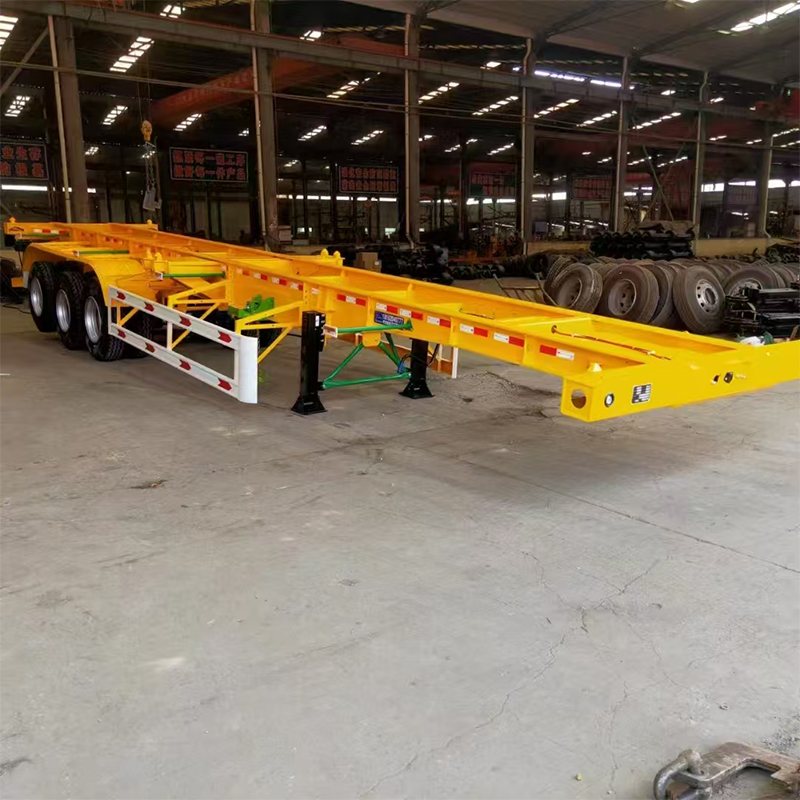
A Skeleton Semi Trailer is an open-frame trailer built mainly for ISO shipping containers. People also call it a skeletal semi-trailer, container chassis, or shipping container chassis. Unlike a flatbed, it has no continuous deck for loose cargo. Longitudinal beams and selected crossmembers support the container at engineered load points.
It remains a semi-trailer because its front lacks a steering axle. During travel, the tractor supports that end through its fifth wheel. The trailer kingpin fits into the fifth wheel and transfers part of the load forward. Rear axles carry the remaining share through the suspension and tires.
Standardization makes fast intermodal transfers possible. ISO 1161:2016 defines functional and strength requirements for container corner fittings. Matching twist locks on the chassis enter those fittings. This interface lets suitable handling equipment transfer one container between ship, rail, yard, and road.
The container does not simply rest anywhere along the beams. Its corner castings meet lock positions designed for its length. Forces then travel through the locks, crossmembers, main beams, kingpin, and axle group. Correct engineering keeps those concentrated loads within the chassis design envelope.
Component | Main function | What operators should inspect |
Main beams and crossmembers | Carry and distribute container loads | Cracks, distortion, corrosion, and damaged welds |
Twist locks | Secure container corner castings | Full movement, positive locking, and missing parts |
Kingpin | Couples the chassis to the tractor | Wear, damage, correct size, and secure mounting |
Landing gear | Supports the uncoupled trailer front | Leg damage, footing, gearbox action, and bracing |
Axles and suspension | Carry load and manage road shock | Alignment, springs or airbags, fasteners, and leaks |
Brakes, tires, and lights | Control stopping and road visibility | Pressure, wear, connections, operation, and damage |
Boca Auto lists two- and three-axle chassis for 20ft, 40ft, and 45ft containers. Those choices still require exact matching to cargo weight, tractor geometry, roads, and local regulations.
The chassis creates a controlled path between the tractor, container, and road. Every trip follows the same basic sequence. Site procedures may differ, but coupling, positioning, locking, checking, hauling, and release remain essential.
1. Inspect and couple the chassis. The driver checks the frame, locks, tires, brakes, suspension, landing gear, and lights. The tractor reverses under the trailer until the fifth wheel captures the kingpin. A pull test confirms engagement before connecting air lines and electrical cables.
2. Position the trailer for loading. The driver parks on firm, level ground inside the handling zone. A crane, reach stacker, straddle carrier, or suitable container handler lifts the box. The operator aligns every bottom corner casting above its correct lock position.
3. Seat and secure the container. The handling machine lowers the container gently onto the chassis supports. Each twist-lock head enters a bottom corner casting. Manual or automatic mechanisms then rotate into their locked position. The driver visually confirms every lock carefully before moving.
4. Carry the load through the frame. Container weight passes into the locks and supporting frame members. Part travels forward through the kingpin into the tractor. The rest reaches the road through suspension, axles, wheels, and tires. Brakes, turns, bumps, and crosswinds add dynamic forces during travel.
5. Release the container safely. At the destination, the vehicle stops in an approved unloading area. The driver applies parking controls and confirms handling equipment readiness. Twist locks are released only after movement risk is controlled. The handler then lifts the container clear without dragging it across the chassis.
The lock does not balance cargo packed inside the container. Poor internal distribution can overload an axle or raise rollover risk. Drivers need verified container mass and loading information whenever available. They must also respect both gross and individual axle limits.
Container length alone never defines a complete trailer specification. The chassis must match the container corner positions, loaded mass, axle rules, tractor, and handling method. A configuration suitable for empty port shuttles may be wrong for heavy inland transport.
Configuration | Common container duty | Main consideration |
20ft fixed chassis | One 20ft container or approved ISO tank | Concentrated weight and axle distribution |
40ft fixed chassis | One 40ft container | Route, turning space, and loaded container mass |
Multi-position chassis | One 40ft unit or supported 20ft arrangements | Correct lock layout and approved loading positions |
45ft chassis | Compatible 45ft container | Rear overhang, turning geometry, and local limits |
Extendable chassis | Fleets moving several supported sizes | Locking the sliding frame before travel |
Two-axle models can suit lighter duties or markets allowing that arrangement. A 3 axle Skeleton Semi Trailer spreads the rear load across another axle. However, more axles do not automatically increase legal payload. Axle spacing, tire ratings, bridge formulas, tractor limits, and national rules still control the combination.
Suspension choices also change overall operating behavior. Mechanical leaf suspension is simple and familiar in many regions. Air suspension can improve height control and load sharing when properly maintained. Buyers should choose parts that local workshops can service quickly.
A fixed chassis offers simple construction for one regular container duty. Multi-position locks add compatibility only at positions engineered into the frame. Extendable or sliding designs provide greater flexibility, yet introduce pins, rails, and operating steps requiring inspection.
Boca Auto publishes 20ft, 40ft, and 45ft compatibility for selected models. Its representative tri-axle product also lists Q345B or T700 beams, dual air brakes, and mechanical suspension. These are model-specific details, not universal skeleton trailer specifications.
Before ordering, send the manufacturer every intended loading arrangement. Include one 20ft container, two 20ft units, 40ft high-cube, ISO tank, or 45ft duty where applicable. Written drawings should show lock locations and approved weight cases.
Skeleton chassis serve dedicated container routes between ports, rail terminals, depots, warehouses, factories, and distribution centers. Their open frames remove deck material unnecessary for standardized container work. That specialization can reduce tare weight and simplify access during inspection.
Fast transfers are another practical advantage. Handling equipment can lift a locked container from one mode and place it on another chassis. Workers do not unload every pallet before the next journey. Cargo remains sealed inside its original box throughout the intermodal movement.
The design supports efficient container handling rather than general freight flexibility. Its benefits depend on the right route and specification.
Lower unnecessary structure: A frame-only chassis usually weighs less than a comparable full-deck trailer. The actual payload gain depends on legal combination limits and the selected build.
Direct container securement: Twist locks connect standardized corner fittings to engineered chassis points. Loading checks become clear, repeatable, and visible to trained operators.
Accessible maintenance: Open beams expose many welds, lines, locks, and running-gear components. Inspections can find corrosion, cracks, or loose parts before failures grow.
Intermodal compatibility: The container moves between different transport modes while cargo stays inside. This can reduce handling time, contamination exposure, and package damage.
A Skeleton Semi Trailer normally cannot carry loose machinery, pallets, steel, or building materials directly. It lacks the supporting floor and general tie-down layout found on a flatbed. A fleet moving mixed cargo may need both trailer types.
Loading also requires suitable container-handling equipment unless the vehicle uses an integrated sidelifter system. Ports usually provide cranes or reach stackers. Remote delivery sites may not provide them. That equipment requirement should be confirmed before route planning.
An open frame does not guarantee low operating cost. Poor alignment increases tire wear, while neglected locks can seize. Corrosion can attack exposed beams in coastal service. Wrong kingpin height or axle placement can also create serious weight problems.
Start with the transport job, not a catalog capacity. Record every container size, maximum verified mass, daily trips, road condition, turning space, and loading machine. Add local gross, axle, width, height, and braking rules. These facts establish the correct frame and running gear.
Next, match the chassis to its tractor. Confirm fifth-wheel height, kingpin size, coupling clearance, air and electrical standards, and permitted combination weight. A technically strong trailer can still be illegal or unstable when paired incorrectly.
Ask suppliers to document these points before production:
Approved container sizes, positions, and maximum loading cases.
Tare weight, structural rating, axle ratings, and legal assumptions.
Main-beam steel grade, dimensions, weld process, and corrosion protection.
Axle, suspension, brake, tire, landing-gear, and twist-lock brands or standards.
Drawing approval, testing records, spare parts, warranty scope, and delivery documents.
Boca Auto says it confirms detailed drawings before production and shares progress photos or videos. That documentation helps buyers verify lock positions, component choices, and agreed configurations before shipment.
Inspect all twist locks for damage, free operation, and positive engagement. Examine beams, crossmembers, welds, and suspension mounts for cracks or distortion. Check tires, wheel fasteners, brakes, air lines, electrical cables, lights, and landing gear. Confirm the container is seated correctly and every required lock is closed.
Operating and securement rules vary by country. For example, Federal Register requires all lower corners secured during United States chassis transport. Its locking devices must resist accidental release. Front and rear securement must also operate independently.
Maintenance intervals should follow the manufacturer, component suppliers, duty cycle, and local inspection law. Coastal fleets need close corrosion control. Rough routes demand frequent checks around beams, suspension, locks, and welds. Record defects, repairs, lubrication, alignment, and brake work for each chassis.
A Skeleton Semi Trailer turns standardized containers into efficient road freight. Its beams carry concentrated loads, while twist locks secure each container corner.
The right model must match container positions, mass, tractor geometry, route, and law. Careful specifications and daily inspections protect uptime, tires, cargo, and drivers. Choose the complete operating system, not simply a quoted capacity.
A: Both terms usually describe open frames built for standardized containers.
A: Only when its frame and lock positions approve both arrangements.
A: Twist locks engage lower container corners and prevent release during travel.
A: Usually not, because flatbeds better support and secure loose freight.
A: Not always; weight, roads, tractor, and local law decide.