Views: 0 Author: Site Editor Publish Time: 2026-05-26 Origin: Site
Selecting the right Semi Trailer for container transport isn't just a logistical necessity; it is a critical compliance and profit driver. Mismatched equipment leads to overweight fines, delayed terminal turnarounds, and heightened accident risks. With shipping containers handling the bulk of global freight, fleet operators must align trailer specifications precisely. You must account for varying container dimensions, including standard 20ft, 40ft, and High Cube models. Loading environments and regional highway regulations further complicate the selection process. This guide provides a bottom-of-funnel decision framework to evaluate, shortlist, and acquire the optimal semi trailer for your container hauling operations. You will learn how to match chassis types to specific cargo profiles. We also cover essential evaluation criteria to help you maximize long-term operational efficiency.
Choosing an incorrect trailer configuration creates cascading failures across a logistics network. Fleet managers must view trailer selection as a strategic asset decision. Every specification directly impacts your bottom line.
Equipment availability drives fleet profitability. High-quality twist-locks and standardized dimensions reduce terminal loading times. Fast coupling processes minimize equipment idle rates at congested ports. When you deploy standardized equipment, your drivers spend less time adjusting mechanisms. They spend more time moving freight. To maximize uptime, implement standardized fleet inspections before dispatching units to busy terminals.
Incorrect axle distribution on a Semi Trailer creates severe regulatory headaches. It leads to Department of Transportation (DOT) violations and unavoidable scale delays. Poor weight distribution also increases mechanical wear on the tractor. Law enforcement aggressively targets overweight containers. Fines scale rapidly based on the overage amount. Proper trailer selection ensures cargo weight spreads evenly across all available axles.
Versatility is a massive advantage in modern logistics. Utilizing versatile models allows fleets to handle multiple container sizes easily. Combo chassis represent a perfect example. They prevent drivers from returning to the yard to swap equipment between jobs. You can transition from hauling a single 40ft container to transporting two 20ft containers seamlessly. This flexibility dramatically improves daily asset utilization rates.
The market offers several distinct trailer designs. Each solves specific logistical challenges. Understanding these variations helps you match the hardware to your exact freight contracts.
Dedicated chassis serve as the backbone of intermodal transport. Manufacturers build them specifically to lock into container corner castings securely.
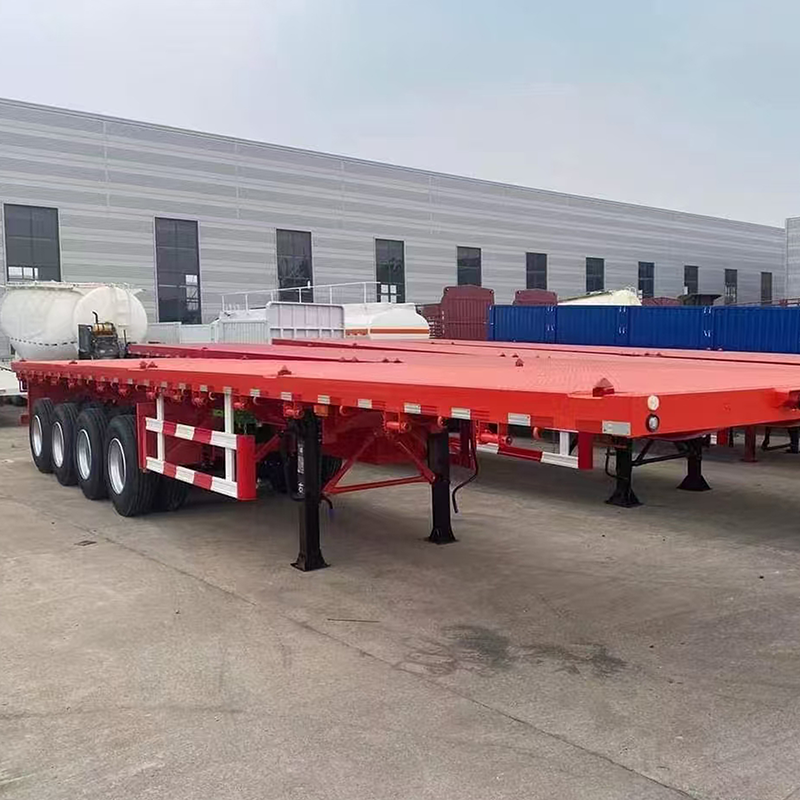
Flatbeds offer exceptional versatility but require careful management. They lack sides and a roof entirely.
Off-grid deliveries demand specialized unloading solutions. Tilt trailers solve the lack of destination infrastructure.
Height restrictions easily ruin a transport route. Drop deck designs keep oversized cargo legally compliant.
Procuring a new trailer requires systematic analysis. Use this four-step evaluation framework to ensure your final choice aligns with your operational realities.
You must first assess your maximum gross weight. A fully loaded 40ft shipping container requires robust weight distribution engineering. State bridge laws dictate how much weight each axle group can legally carry. Evaluate the need for tandem versus tridem (three-axle) setups. Tridem configurations become necessary when hauling heavy agricultural goods or dense liquids. Always check specific state scale limits along your primary routes.
The destination environment dictates your offloading capabilities. Ignore this dimension, and you risk stranding your cargo.
Environmental factors degrade equipment quickly if you ignore them during the spec phase.
The materials used in your trailer dictate its payload ceiling and purchase price.
The chart below summarizes the physical and operational differences you must weigh during procurement.
| Trailer Category | Primary Material | Key Feature | Ideal Use Case | Infrastructure Needs |
|---|---|---|---|---|
| Standard Chassis | Steel | Twist-lock corners | High-volume port to warehouse | Crane / Standard Dock |
| Gooseneck Chassis | Steel / Alum | Tunnel slot drop-frame | High Cube (HC) routing | Crane / Standard Dock |
| Tilt Trailer | Steel | Hydraulic lift bed | Rural / Ground-level drops | None (Self-unloading) |
| Step Deck | Steel / Alum | Lowered main deck | Oversized / Modified containers | Crane / Heavy Forklift |
Even the perfect trailer specification can fail if managed improperly. You must recognize common operational pitfalls and address mechanical maintenance proactively.
Standard containers measure 8 feet 6 inches tall. High Cube (HC) containers are roughly 1 foot (30cm) taller. Pairing an HC container with a standard straight-frame semi trailer usually results in height clearance violations. The legal height limit in the US is typically 13 feet 6 inches. Exceeding this causes devastating bridge strikes. Gooseneck chassis serve as the primary mitigation tool for this exact problem.
Twist-locks represent the primary failure point on any container semi trailer. Drivers constantly engage and disengage them. Terminal crane operators sometimes drop containers aggressively, stressing the locking pins. Implement strict preventative maintenance schedules. Have mechanics inspect these locks for mechanical fatigue regularly. Ignoring worn twist-locks easily leads to catastrophic load shifts at highway speeds.
You cannot pair just any tractor with your new trailer. Ensure the fifth-wheel height on the fleet’s tractors aligns perfectly with the kingpin specifications of the chosen Semi Trailer. Mismatched heights result in a slanted deck. A slanted deck forces uneven weight distribution across the axles. This uneven pressure ruins tires rapidly and creates severe braking instability during wet conditions.
Your financial strategy dictates how you acquire equipment. Both renting and purchasing offer distinct advantages based on your business model.
Purchasing makes sense for high-frequency, predictable routes. Buying unlocks long-term amortization benefits. It also allows for highly custom specifications. You can order load-positioning sliders or specify lightweight aluminum frames. Owning the asset guarantees availability during peak shipping seasons. You never have to worry about regional equipment shortages.
Renting serves different operational goals. Choose leasing for seasonal spikes or short-term contracts. It also helps when testing a brand-new market without committing massive capital. Renting shifts the maintenance, storage, and depreciation burdens directly to the provider. This strategy frees up immediate CapEx for other critical business investments.
You need data before calling a manufacturer. Audit your freight contracts for the next 12 months. Look at the volume of 20ft versus 40ft containers. If 20ft/40ft variability exceeds 30%, request quotes for Combo Chassis immediately. If your delivery destinations routinely lack heavy infrastructure, shortlist Tilt Trailers instead. Make your final move based on contract realities.
Choosing the correct semi trailer for container transport requires balancing strict legal weight limits against the physical realities of your loading environments. You cannot afford to guess when specifying intermodal equipment. Equipment mismatches directly erode profit margins through fines, delays, and excess fuel consumption.
Base your final decision on verifiable data. Weigh your most frequent payloads accurately. Audit your delivery sites for crane access and dock heights. Calculate the financial return of specialized features like goosenecks or aluminum frames before committing funds. Finally, consult with a qualified manufacturer to spec a unit meeting all local DOT regulations perfectly.
A: A container chassis is a skeletal frame specifically designed to lock into the corners of a shipping container via twist-locks, reducing weight. A flatbed is a solid deck used for general freight and requires more complex securement for containers.
A: Generally, no. Doing so risks exceeding the legal height limit (usually 13ft 6in in the US). A gooseneck or drop-deck chassis is typically required to legally accommodate the extra foot of height.
A: You must specify a tilt (or tipping) semi trailer. This utilizes hydraulics to angle the bed, allowing the container to slide smoothly onto the ground as the truck pulls forward.